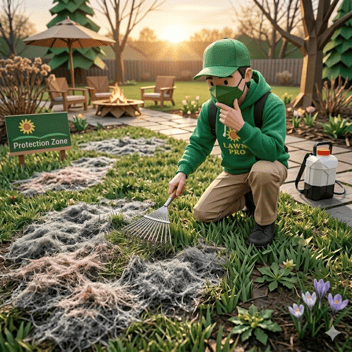



The Spring Seeding Trap: Why Waiting Until Fall is the Real "Golden Rule"
It’s a common sight at big-box hardware stores across Nassau and Suffolk: pallets of grass seed stacked high the moment the sun comes out. Most homeowners assume spring is the ideal time to fill in those bare spots, but we’re going to tell you something you likely won't hear in the checkout line: on Long Island, spring seeding is actually a high-risk move.
The Pre-Emergent Conflict
The issue comes down to simple science. To ensure your lawn isn't overrun by crabgrass, we apply a professional pre-emergent barrier in the spring. This "shield" is designed to stop seeds from germinating, but it isn't smart enough to know the difference between a "good" grass seed and a "bad" weed seed. It stops both.
If you insist on seeding now, you are forced to skip that critical crabgrass protection. The result? By July, those bare spots won't be filled with lush turf; they’ll likely be a lawn full of aggressive summer weeds.
A Better Strategy for Bare Spots
At LawnProNY, we want to help you avoid the frustration of watching your investment get choked out by weeds. If you have thin areas, we suggest a different diagnostic approach:
- Encourage Natural Spread: Instead of seeding, we recommend heavy watering and strategic fertilization to encourage your existing grass to spread and fill in the gaps naturally.
- The "Golden Rule": In Suffolk, the most successful lawns follow a simple timeline: Fertilizer in the spring, seeding in the fall.
Fall-planted grass doesn't have to compete with a pre-emergent barrier or the upcoming July heat, giving it months of cool weather to get established. If you're tired of the spring seeding cycle that leads to a summer weed mess, let’s talk about a plan that actually works for the Long Island climate.